If you’ve ever walked a fabric trade show floor, stopped at a custom apparel booth, or even glanced at a digital print shop’s sample bin, you’ve probably seen Roll To Roll (R2R) printers at work. There’s a common question I hear almost daily from textile designers, small-batch apparel makers, and even home furnishing brands just getting off the ground: “Can a Roll To Roll printer actually print on fabric?” Roll To Roll Printer

Let me cut to the chase: Yes, it absolutely can. But it’s not as simple as grabbing your office R2R office printer and slapping fabric through it. As a supplier who’s been building and refining R2R printers for textile use for over a decade, I’ve fielded this question so many times I’ve got a go-to answer that breaks down what makes this technology work for fabric, what pitfalls to watch for, and why it’s become such a game-changer for the industry.
First, let’s define what we’re talking about here, because a lot of people mix up general R2R printers with textile-specific R2R systems. A standard R2R printer (think of the ones used for signage, vinyl decals, or even wide-format paper posters) feeds material from one roll to another, cuts it once at the end of the run, and that’s it. Textile R2R printers do all that, but they’re built for a material that behaves nothing like vinyl or paper—fabric stretches, absorbs ink unevenly, shifts slightly as it moves, and some types are even heat-sensitive. That’s why off-the-shelf R2R printers rarely work for fabric, but purpose-built ones are the backbone of modern textile printing.
Let’s start with the core mechanics that make R2R printing on fabric possible. The biggest challenge with fabric is that it’s not rigid like paper. When you feed a stiff material through a printer, it sits flat against the platen (the flat surface under the print heads) consistently, so every dot of ink lands exactly where it’s supposed to. Fabric? It can sag, pull, or shift within the rollers if not held correctly. That’s why textile R2R systems use what’s called a vacuum platen. It’s not just a flat hard surface—there are tiny suction holes across the entire platen that pull the fabric tight and flat against the surface, eliminating wrinkles and unwanted movement mid-print. I’ve seen first-hand what happens if a machine skimps on the platen: a perfectly designed print will have a smudge where the fabric shifted 1mm, ruining a whole roll of high-end organic cotton.
Next up is the ink. You can’t use the same ink you use for paper or vinyl on fabric. Those inks sit on top of the material, and they’ll wash off after the first laundry cycle. Textile R2R printers use either water-based reactive ink, disperse ink, or pigment ink, depending on the fabric type and the desired finish. Reactive ink, for example, is designed to bond chemically with natural fibers like cotton, linen, or silk. When you print it, you then cure it with heat (another key part of the R2R workflow for textiles) so the ink sets, doesn’t fade, and feels soft to the touch—no stiff, crunchy fabric you’d find from old screen prints. Disperse ink works best for synthetic fabrics like polyester, sublimating directly into the fibers for a color that’s as durable as the fabric itself. Pigment ink is more versatile, working on both natural and synthetic blends, though it does tend to sit a bit more on the surface, so it’s often used for items like home decor where durability is key, but you don’t need the same deep fiber bond.
Now, what about the roll handling? Fabric rolls come in all sizes, weights, and widths, from narrow 10-inch rolls for small garment cuts to 10-foot wide rolls for upholstery. A good R2R textile printer is built to handle that range, with adjustable rollers that grip the fabric without stretching it too tight. If you stretch fabric too much as it feeds, it will shrink slightly once you take it off the roll after printing, throwing off the alignment of the design. That’s why our machines use servo-controlled rollers that move at a consistent speed, and a tension system that’s calibrated per fabric type. For delicate fabrics like silk chiffon, we set the tension super light, so we don’t pull the threads out of alignment. For heavy canvas or denim, we crank the tension just enough to keep it flat without stretching.
I know what some of you are thinking: “I’ve seen home inkjet printers that can print on fabric with special paper—why would I need an R2R system?” That’s a fair question, and it comes down to scale and quality consistency. The home fabric printers you buy at a craft store are for small, one-off projects. R2R textile printers are designed for continuous runs, so you can print 100 yards of fabric with the exact same color, alignment, and finish every single time. That’s non-negotiable for apparel brands that need 500 identical dresses, or bedding manufacturers that need hundreds of yard of fabric that matches across production runs. R2R systems also have much higher print resolution for large areas—you don’t want a 10-foot wide upholstery print that’s blurry just because you stretched it out of a flatbed printer.
But like any technology, R2R fabric printing isn’t perfect, and there are myths I hear all the time that I want to clear up. The first myth is that it only works for synthetic fabrics. No way—we have customers printing everything from organic cotton for sustainable t-shirts to silk for high-end scarves, all on the same R2R system, as long as you adjust the ink and curing settings. The second myth is that R2R printing is only for big brands. We’ve had small-batch makers who print 50 yards a month for custom kids’ clothing, up to large apparel brands printing 50,000 yards a year. There are entry-level R2R printers for small runs, and industrial models for high-volume production, so it scales to whatever you need.
Another big point: post-print processing. R2R printing on fabric doesn’t stop when the heads finish spraying ink. Curing is a critical step that’s built into most modern textile R2R lines. Reactive ink needs to be cured at around 180-200 degrees Celsius for a set time to set the color, while disperse ink for polyester uses a slightly higher temperature. Some systems also include a washing and finishing step inline, so you don’t have to take the fabric off the roll to process it. That’s a huge time-saver, because you can print, cure, and finish an entire roll without handling it manually multiple times, which cuts down on errors and labor costs.
Let me give you a real example of how this works in practice. Last year, we worked with a small sustainable apparel brand that wanted to launch a line of t-shirts with custom nature prints. Before they got our R2R textile printer, they were using screen printing, which meant high setup costs for each design, minimum orders of 500 shirts, and limited color options. With our 64-inch wide R2R printer, they can upload a custom design, print a test roll of 10 yards to check the color, then print 100 yards of fabric in a few hours. The reactive ink we recommended bonds with their organic cotton, so the t-shirts wash and feel just like screen-printed ones, but with way more vibrant colors and no setup fees per design. They now print new limited-edition designs every month, instead of 2-3 times a year, which has doubled their sales. That’s the real power of R2R fabric printing.
I’d be remiss if I didn’t mention the challenges that still exist, though. For very high-end, delicate fabrics like silk organza, even the best R2R system can have minor alignment issues if the roll is not perfectly wound. There are also limits to ink absorption—if you use a fabric that’s too tightly woven, ink can pool on the surface and look blotchy, so we work with customers to recommend pre-treated fabrics that help ink absorb evenly without compromising the fabric’s feel. That’s why we don’t just sell machines—we help our customers choose the right combination of machine, ink, and fabric for their specific needs, because a R2R printer is only as good as the system around it.
So when someone asks me “Can a Roll To Roll printer print on fabric?” my answer is a resounding yes—but with the caveat that it has to be a textile-specific R2R system. It’s not a drop-in replacement for a paper printer, but it’s become the most efficient, versatile way to print fabric for everything from small-batch custom goods to large-scale commercial production. The technology has come a long way in the last 15 years, too—earlier R2R textile printers were slow, had poor color accuracy, and required a lot of maintenance, but modern models have full-color calibration, high-speed print heads that can print up to 100 square meters per hour, and intuitive software that makes it easy for anyone to use, not just engineering experts.
If you’re a designer, apparel maker, home goods brand, or even a graphic artist looking to print on fabric, I encourage you to look past the basic R2R printers you see for signage. Textile-specific R2R systems are the future of fabric printing, because they combine the efficiency of roll-to-roll production with the versatility of digital printing. No more screen printing setups, no more limited design options, no more minimum order requirements. You can print exactly what you want, when you want it, on whatever fabric you choose, all on an R2R system built for that exact purpose.
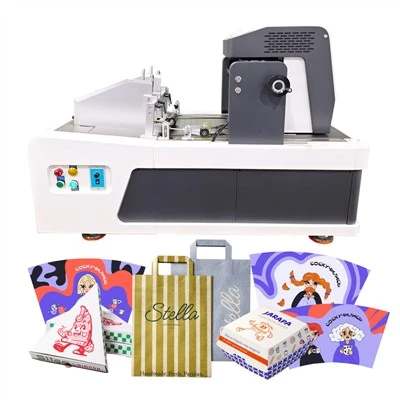
If you’re ready to learn more about how an R2R printer can work for your fabric printing needs, we’re here to talk through your specific goals, budget, and production scale. Whether you’re just starting out with a small workshop or scaling up for large commercial runs, we can help you find the right system that fits, with training, support, and ink options tailored to your work. Don’t waste time with generic printers that will leave you with misaligned prints or faded ink—reach out to discuss your requirements today.
Water-based Digital Inkjet Printer References
- Textile Printing: Technology and Innovation, Elsevier, 2020.
- “Roll-to-Roll Digital Printing for Textiles: A Technical Review”, Journal of Digital Printing in Textiles, Vol. 12, No. 3, 2018.
- Sustainable Textile Printing: Materials and Processes, Woodhead Publishing, 2021.
Chengdu Kelier Electronic Co., Ltd.
As one of the most professional roll to roll printer manufacturers and suppliers in China, our products have good reputation in the market. Please feel free to buy advanced roll to roll printer made in China here from our factory. We also accept customized orders.
Address: Unit 1302, 13th Floor, Building 1, Unit 2, No. 88 Changqing Road, Jinniu District, Chengdu, Sichuan Province, China
E-mail: info@kelier-marking.com
WebSite: https://www.kelier-printer.com/
