Hey there! As a supplier of Bidirectional Trigger Diodes, I often get asked about all sorts of technical stuff. One question that pops up quite a bit is, "What is the holding current of a Bidirectional Trigger Diode?" Well, let’s dive right into it. Bidirectional Trigger Diode
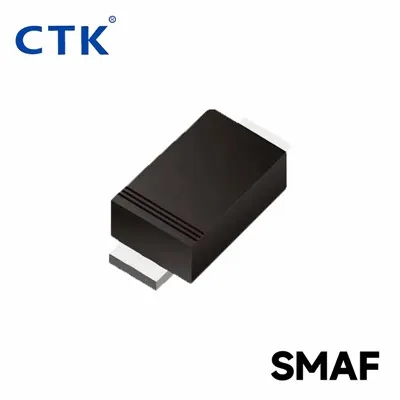
First off, let’s understand what a Bidirectional Trigger Diode is. It’s a type of semiconductor device that conducts current in both directions once a certain voltage level, known as the breakover voltage, is reached. These diodes are super useful in a bunch of applications, like triggering thyristors in power control circuits, phase control, and even in some types of lighting circuits.
Now, onto the holding current. The holding current, usually denoted as IH, is the minimum current that must flow through the Bidirectional Trigger Diode to keep it in the conducting state after it has been triggered. Once the current drops below this holding current value, the diode will stop conducting and return to its non – conducting state.
Think of it like a light switch. When you turn on a light, the switch needs a certain amount of "push" to stay in the on position. If you don’t apply enough force, the switch will flip back to the off position. In the same way, the Bidirectional Trigger Diode needs a minimum current (the holding current) to stay in the conducting state.
The value of the holding current can vary depending on a few factors. One of the main factors is the temperature. As the temperature goes up, the holding current usually decreases. This is because at higher temperatures, the semiconductor material in the diode becomes more conductive, so it takes less current to keep it in the conducting state.
Another factor that can affect the holding current is the type of Bidirectional Trigger Diode. Different manufacturers might produce diodes with slightly different characteristics. Some diodes are designed for high – power applications, and they might have a higher holding current compared to those designed for low – power applications.
Let’s talk about why the holding current is important. In a circuit, if the current drops below the holding current, the diode will turn off. This can cause problems in applications where continuous conduction is required. For example, in a phase – control circuit, if the diode turns off prematurely due to the current dropping below the holding current, it can lead to incorrect phase control and affect the performance of the entire circuit.
As a supplier, I’ve seen firsthand how important it is to choose the right Bidirectional Trigger Diode with the appropriate holding current for a specific application. If you’re working on a project that requires a high – power output, you’ll need a diode with a higher holding current. On the other hand, if you’re working on a low – power, battery – operated device, a diode with a lower holding current might be more suitable.
I remember one time, a customer came to me with a problem. They were using a Bidirectional Trigger Diode in a power control circuit, but the circuit kept malfunctioning. After some testing, we found out that the holding current of the diode they were using was too high for their application. The current in their circuit was dropping below the holding current, causing the diode to turn off and disrupt the circuit. We switched to a diode with a lower holding current, and the problem was solved.
So, how do you determine the holding current of a Bidirectional Trigger Diode? Well, most manufacturers provide this information in the datasheet of the diode. The datasheet will give you the typical and maximum values of the holding current at different temperatures. It’s always a good idea to check the datasheet before you start using a diode in your circuit.
When you’re choosing a Bidirectional Trigger Diode, it’s also important to consider other parameters like the breakover voltage, peak current, and capacitance. These parameters can all affect the performance of the diode in your circuit. For example, if the breakover voltage is too high, it might be difficult to trigger the diode. And if the peak current rating is too low, the diode might get damaged under high – current conditions.
As a supplier, I’m here to help you make the right choice. I’ve got a wide range of Bidirectional Trigger Diodes in stock, with different holding current values and other parameters. Whether you’re working on a small DIY project or a large – scale industrial application, I can help you find the perfect diode for your needs.
If you’re interested in learning more about Bidirectional Trigger Diodes or if you’re looking to purchase some for your project, don’t hesitate to get in touch. I’m always happy to answer your questions and provide you with the best products at competitive prices.
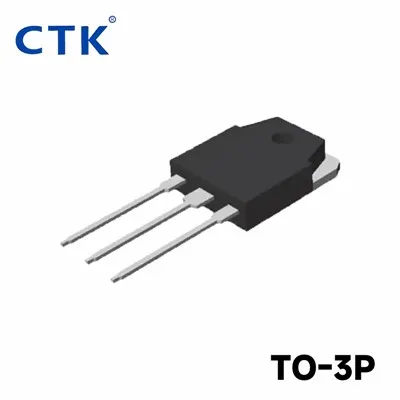
In conclusion, the holding current of a Bidirectional Trigger Diode is a crucial parameter that can affect the performance of your circuit. By understanding what it is and how it works, you can make informed decisions when choosing a diode for your application. So, if you’ve got any questions or need some advice, just reach out. I’m here to help you make your project a success.
Transistors References:
- Semiconductor Device Physics textbooks
- Datasheets of various Bidirectional Trigger Diodes
Tongke Electronic Co., Ltd
Tongke Electronic Co., Ltd. is one of the most experienced bidirectional trigger diode manufacturers and suppliers in China, featured by quality products and low price. Please rest assured to wholesale advanced bidirectional trigger diode made in China here from our factory. Contact us for pricelist.
Address: No.3,Chayuan Rd, Street 3, AilingKan, Dalingshan, Dongguan, Guangdong, China.
E-mail: jack@ctk-elec.com
WebSite: https://www.ctkchip.com/
