Do non – magnetic tools for oil have a high precision level? Non-Magnetic Tools for Oil
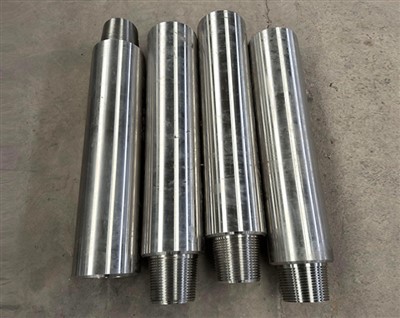
Hey there! I’m a supplier of non – magnetic tools for the oil industry. You might be wondering if these tools actually have a high precision level. Well, let’s dive right into it.
First off, what are non – magnetic tools for oil? These are tools specifically designed for use in the oil and gas sector where magnetic interference can be a real problem. In oil exploration and production, there are often sensitive equipment and operations that require a non – magnetic environment. For example, when drilling for oil, the downhole tools need to operate accurately without being affected by magnetic fields. If a tool is magnetic, it can interfere with the measurement equipment, leading to inaccurate readings and potentially costly mistakes.
So, back to the question of precision. Non – magnetic tools for oil are built with a high level of precision. The manufacturing process of these tools is highly specialized. We use advanced machining techniques to ensure that each tool meets strict dimensional and performance standards. For instance, when making non – magnetic drill bits, the cutting edges are ground to extremely precise angles. This precision is crucial because it affects how well the drill bit can penetrate the rock formations. A slightly off – angle cutting edge can lead to inefficient drilling, increased wear on the bit, and even damage to the drilling equipment.
Another aspect of precision in non – magnetic tools is the material selection. We carefully choose non – magnetic materials that have the right properties for the job. Materials like certain types of stainless steel or titanium are commonly used. These materials not only have low magnetic permeability but also offer high strength and corrosion resistance. The quality of the material directly impacts the precision of the tool. A high – quality material can hold its shape and dimensions better under the harsh conditions of oil drilling, such as high pressure and temperature.
Let’s talk about the testing and quality control process. Before a non – magnetic tool leaves our facility, it goes through a series of rigorous tests. We use state – of – the – art testing equipment to measure the tool’s magnetic properties, dimensional accuracy, and mechanical performance. For example, we use magnetic field meters to ensure that the tool has a negligible magnetic field. We also use coordinate measuring machines (CMMs) to check the dimensions of the tool to within a few micrometers. Any tool that doesn’t meet our strict quality standards is either re – worked or discarded. This strict quality control process helps to guarantee that the tools we supply have a high level of precision.
In the oil industry, precision is not just about the physical dimensions of the tool. It’s also about how well the tool performs in real – world applications. Non – magnetic tools need to be able to work in a variety of conditions, from shallow wells to deep – sea drilling. They need to be reliable and consistent in their performance. For example, a non – magnetic torque wrench used in oil rigs needs to apply the exact amount of torque every time. If it’s off by even a small amount, it can lead to loose connections or over – tightened bolts, which can be dangerous in an oil production environment.
Now, let’s look at some of the challenges in maintaining high precision in non – magnetic tools. One of the biggest challenges is the wear and tear that these tools experience. In the oil industry, tools are often used in abrasive environments. For example, drill bits are constantly in contact with hard rock formations, which can cause the cutting edges to wear down. To address this, we use advanced coatings on our tools. These coatings can increase the hardness and wear resistance of the tool, helping to maintain its precision over a longer period of time.
Another challenge is the complexity of the oil industry itself. Different oil fields have different geological conditions, and the tools need to be able to adapt to these conditions. For example, in some areas, the rock formations are very hard, while in others, they are more porous. Our non – magnetic tools are designed to be versatile and able to perform well in a variety of geological settings. We work closely with oil companies to understand their specific needs and develop tools that can meet those requirements.
In conclusion, non – magnetic tools for oil do have a high precision level. The combination of advanced manufacturing techniques, careful material selection, strict quality control, and the ability to adapt to different conditions all contribute to the high precision of these tools. If you’re in the oil industry and are looking for reliable, high – precision non – magnetic tools, we’re here to help. We’ve got a wide range of tools that can meet your specific needs. Whether you’re involved in exploration, drilling, or production, we can provide you with the tools you need to get the job done right.
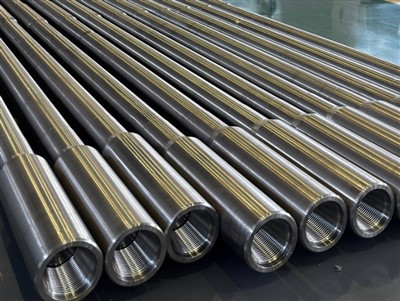
If you’re interested in learning more about our non – magnetic tools for oil or want to discuss a potential purchase, don’t hesitate to reach out. We’re always happy to have a chat and see how we can help you with your tooling needs.
Non-Magnetic Tools for Coal References:
- "Handbook of Oilfield Equipment and Technology"
- "Non – Magnetic Materials in the Oil and Gas Industry" research papers from industry – related journals.
Shanxi Zhonghe Non-Magnetic Drill Tool Co., Ltd.
As one of the most professional non-magnetic tools for oil manufacturers and suppliers in China, we also support customized service. With abundant experience, we warmly welcome you to buy high quality non-magnetic tools for oil for sale here from our factory. Contact us for more details.
Address: No.168 Fenglei Street, Houma City, Linfen City, Shanxi Province, China.
E-mail: lucy@nmdrillcollar.com
WebSite: https://www.zhnmdc.com/
