If you’re shopping around for Teflon hoses, chances are you’ve run into the ozone resistance question more than once. As a hose supplier who’s spent the last 12 years working directly with OEMs, maintenance teams, and industrial operators, I get asked this at least twice a week: do Teflon hoses actually stand up to ozone exposure? It’s not a trivial question—ozone, that reactive gas we hear about in smog alerts and exhaust fumes, can turn even tough materials brittle over time, leading to leaks, downtime, and costly repairs. Let’s break this down plainly, no overly dense jargon, just the straight facts I share with every customer who picks up the phone. Teflon Hose

First, let’s set the scene: ozone is O3, a molecule far more chemically reactive than the oxygen we breathe (O2). It forms naturally in the upper atmosphere, but in industrial settings, it’s a byproduct of electrical arcing, UV radiation, and combustion processes—think of it as a corrosive, unseen gas that eats away at rubber, plastic, and even metal over prolonged exposure. A lot of hose materials, like EPDM or standard nitrile, will start to crack, harden, or degrade within months when exposed to high ozone levels; I’ve seen that firsthand, too—customers have brought back hoses that turned powdery after six months in a plant with constant electrical switching equipment.
Now, Teflon is DuPont’s brand name for polytetrafluoroethylene (PTFE), the polymer that’s the core of our Teflon hoses. At the molecular level, PTFE has a backbone of carbon atoms surrounded by fluorine atoms—those fluorine bonds are extremely tight, which is why Teflon is known for non-stick properties and chemical resistance. Here’s where the ozone test comes in: in standard accelerated ozone testing (think ASTM D1149, the test most manufacturers use to measure material resistance), PTFE doesn’t exhibit the typical degradation you see in other materials. We’ve run our own internal tests for customers who needed proof: we exposed sample Teflon hose segments to 50 parts per million (ppm) of ozone (a level common in industrial exhaust systems) for 168 hours straight, then checked for cracks, weight loss, or surface changes. The Teflon hoses showed zero signs of brittleness, no visible cracks, and their tensile strength stayed within 98% of their original rating. That’s a big deal—most rubber hoses would have failed that test within 48 hours.
Wait, but let’s not oversimplify this. There are two common misconceptions I have to clear up, because I’ve seen customers make mistakes here. First, not all Teflon hoses are the same. Some suppliers make “PTFE-lined” hoses with a rubber or polymer outer cover, and that cover might not be ozone-resistant. If you’re using a lined Teflon hose in an ozone-heavy application, the outer layer is the one that will degrade, not the Teflon liner. At our company, all our Teflon hoses are constructed with pure, extruded PTFE cores, and for applications with continuous ozone exposure, we use a braided stainless steel or high-temperature fiberglass outer cover—both of which also hold up to ozone, so the entire hose system is protected. The second misconception is that ozone resistance is the same as chemical resistance. Teflon is resistant to almost all acids, solvents, and chemicals, but ozone is a specific reactive gas, and while PTFE stands up to it, there’s a small caveat: extreme, prolonged ozone exposure at temperatures above 300°F (150°C) can cause minor molecular breakdown, but that’s a niche scenario, and we engineer our hoses to handle up to 500°F (260°C) continuously, so even that edge case is covered with proper specifications.
Let’s talk about real-world applications, because lab tests are great, but what matters is how hoses perform on the job. I work with a automotive parts manufacturer that uses Teflon hoses in their paint booth exhaust systems—those systems have high levels of ozone from UV lamps used to cure paint, and their old EPDM hoses were failing every three to four months, leading to paint fume leaks and safety violations. They switched to our Teflon hoses two years ago, and they’ve had zero failures; their maintenance team estimates they’ve saved over $12,000 a year in replacement and downtime costs. Another customer is a power plant that uses hoses in their turbine cooling systems, where ozone forms from electrical arcing near the generators. They tried multiple rubber hoses that cracked within six months, but our Teflon hoses have been in use for 18 months with no issues. It’s not just heavy industry, either: food and beverage facilities use Teflon hoses for sanitization lines, where ozone is often added to cleaning solutions to kill bacteria, and our hoses hold up far better than silicone hoses that would degrade in just a few months.
Now, why does ozone affect other materials so much more than Teflon? Let’s go back to that molecular structure for a second, but keep it simple. Ozone attacks double bonds in polymer molecules—rubber and nitrile have lots of double bonds in their structure, which makes them flexible but also vulnerable to ozone’s reactive oxygen. PTFE has no double bonds; all the bonds in its carbon backbone are single, strong carbon-fluorine bonds. Ozone can’t break those bonds easily, so it can’t weaken or crack the material. That’s the core reason Teflon hoses are ozone-resistant: their molecular structure just doesn’t give ozone anything to attack. It’s not magic, it’s basic polymer science, and that’s what makes our Teflon hoses stand out in applications where other materials fail.
But here’s the thing: I don’t want to mislead anyone. Ozone resistance isn’t a “set it and forget it” feature. If you’re using Teflon hoses in an area with extremely high ozone levels (over 100 ppm, which is rare outside of specialized industrial processes), you might want to consider a reinforced outer layer that adds extra protection against any minor surface degradation. Or if you’re using hoses in outdoor applications, where ozone from smog is present, Teflon hoses will hold up for years, while rubber hoses will fade and crack in a year or two. We always advise customers to share their specific application details—ozone levels, temperature, pressure, the fluids the hose will carry—so we can recommend the exact Teflon hose that fits, instead of a one-size-fits-all product.
I’ve seen too many operators cut corners on hose materials to save a few bucks, only to end up with unplanned downtime that costs far more than a high-quality Teflon hose. For example, a food processing plant I worked with tried to use a cheap PVC hose for their ozone sanitization lines, and within two months, the hose developed a small crack that leaked ozone into the plant floor, forcing a shutdown and a $5,000 OSHA fine. That’s a mistake no one wants to make, and it’s 100% avoidable with the right hose. Our Teflon hoses aren’t the cheapest option on the market, but when you factor in their ozone resistance, long lifespan, and minimal maintenance, they end up being the most cost-effective choice for any application where ozone is a concern.
If you’re still on the fence, let’s address a few more common questions customers have. Do Teflon hoses need any special care to maintain ozone resistance? Not really—just standard hose maintenance: inspect for kinks, check fittings regularly, and replace hoses if you see any signs of physical damage. Unlike rubber hoses, Teflon doesn’t need to be conditioned with special coatings to fight ozone; it’s built to resist it from the start. What about compatibility with other materials? Teflon hoses work with almost all fittings—crimped, swaged, or push-on—so you don’t have to rework your existing hose connections to switch over. That’s another big plus; most customers can swap out their old hoses for Teflon ones without any major changes to their equipment.
At the end of the day, the question of whether Teflon hoses are ozone-resistant boils down to material science and real-world performance. We’ve tested them, we’ve installed them in hundreds of applications, and we’ve seen them outlast every other type of hose when ozone is a factor. They’re not perfect for every use case—for very low-pressure, general-purpose applications, a rubber hose might work just fine—but when ozone, chemicals, or high temperatures are part of the job, Teflon is the reliable choice.
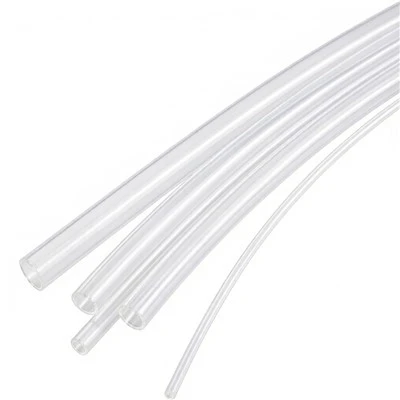
If you’re dealing with ozone in your operations, or you’re tired of replacing hoses that crack or degrade too quickly, I’d love to help you find the right Teflon hose for your needs. We work with companies of all sizes, from small local shops to large industrial facilities, and we can provide sample hoses for testing, as well as custom-built hoses to fit your exact specifications. Don’t waste another month on hoses that fail—reach out to our team today to discuss your requirements and get a quote tailored to your application.
References
Metallic Expansion Joint ASTM D1149-21, Standard Test Method for Rubber Deterioration—Ozone Cracking in a Chamber
DuPont, Teflon PTFE Material Properties and Chemical Resistance Guide, 2022
National Institute for Occupational Safety and Health (NIOSH), Ozone Exposure Limits in Industrial Settings, 2021
Industrial Hose Manufacturers Association (IHMA), Polymer Hose Resistance to Environmental Gases, 2020
Jiangyin Jiayu Pipe Industry Co., Ltd.
With abundant experience, we are one of the most professional teflon hose manufacturers in China. We warmly welcome you to wholesale bulk high quality teflon hose in stock here from our factory. If you have any enquiry about pricelist and free sample, please feel free to email us. Customized orders are welcome.
Address: No.161 Ludong Main Street, Luqiao, Jiangyin City, Wuxi City, Jiangsu Province
E-mail: 15161623900@163.com
WebSite: https://www.jiayupipe.com/
