Hey folks, let’s cut to the chase—if you’re in the logistics, construction, or agriculture game, you’ve probably heard “full trailer” thrown around, but do you actually know what makes it different from every other trailer that’s rolling down the highway? I’m the owner of a trailer supply company, and I see guys mix this up all the time at trade shows, over the phone, even when they’re loading up a new rig for their first big job. Today, we’re breaking it down like we’re grabbing coffee and not spouting textbook jargon. Full Trailer

First off, let’s kill the myth that all trailers are the same. A full trailer is basically a rig that doesn’t have a front axle or powertrain of its own—meaning it can’t move on its own. It hooks up to a tractor unit (that’s the big rig’s cab and engine, not the trailer part) and relies entirely on that tractor to get where it’s going. What sets it apart from, say, a semi-trailer? Oh, that’s a common mix-up! Semi-trailers only have axles at the back, so part of their weight rests on the tractor’s fifth wheel. Full trailers? All their axles are at the back, and the coupling point (that’s the metal pin or ball that connects to the tractor) is usually way forward—like near the middle or front of the trailer itself. That’s a key detail most guys miss when they’re browsing specs.
Let’s talk specs a little, keep it simple, no fancy math. Full trailers are built for carrying heavy, bulk, or oversized loads that can’t be split onto multiple smaller trailers. You’ll see ’em in a few common types around here: flatbed full trailers are for lumber, steel beams, or construction equipment—no sides, easy to slide big stuff on. Dump full trailers are for gravel, sand, or agricultural waste, with a hydraulic lift to tip the load out the back. And box full trailers? Those are your enclosed ones for moving furniture, retail goods, or even food supplies, so you don’t have to worry about rain or theft. One thing I always highlight to new clients: because the weight is spread out more evenly across all axles, full trailers handle way better on rough, uneven ground than semi-trailers, which is why they’re such a hit for off-road jobs or worksites that aren’t paved.
Wait, let’s get real about why that matters for your business. If you’re a construction company hauling bulldozers across a dirt jobsite, a semi-trailer might tip because it’s only got back axles—full trailers’ forward coupling keeps the center of gravity lower, less chance of that load shifting or the rig flipping. Or if you’re a farmer hauling 20 tons of corn from the field to the grain elevator, you don’t want to be messing with a semi that can’t handle the uneven farm roads. Full trailers are built for that consistent, heavy-duty hauling, no frills, just reliability.
Now, let’s talk about what people get wrong when they’re shopping. I had a guy call me last month, said he needed a “full trailer” but tried to hook a 40ft semi box to his pickup. Bro, that’s not gonna work—pickups are for light-duty trailers, not full-size full trailers. The coupling system is totally different: full trailers use a kingpin (that’s the big metal pin you lock into the fifth wheel on the tractor), while smaller pull-behinds use a ball hitch. Mix those up, and you’re looking at a wrecked trailer, damaged tractor, and way more stress than you need. Another mistake? Buying a used full trailer without checking the axle rating. I’ve seen guys grab a cheap old dump trailer that only holds 10 tons, then overload it with 18 tons of gravel and snap an axle on the first trip. Been there, fixed that, so I always push clients to match the trailer’s capacity to their actual load, not what they think they might need.
As a full trailer supplier, I’m not just here to sell you a rig and disappear. I see way too many suppliers that dump a trailer on a client and call it a day, but my team does a walkthrough with every customer before they take it off the lot. Let’s say you’re a landscaper needing a flatbed full trailer for hauling mulch and small excavators—we’ll check that the tie-down points are reinforced, the tires are rated for the weight you’re moving, and the brakes are set right for stop-and-go worksite driving. If you’re a small business moving retail inventory? We’ll make sure the box has proper vents (for food products) or reinforced walls so it doesn’t dent when you’re loading pallets. I’ve been doing this for 12 years, and the number one thing that keeps clients coming back is we don’t just sell trailers—we help you pick the right one for your job, no nonsense.
Wait, let’s get into when a full trailer is the right call, versus when it’s not. If you’re doing long-haul highway runs across the country, a semi-trailer is probably more fuel-efficient because it’s lighter. But if 70% of your work is on worksites, farm roads, or uneven terrain? Full trailer is non-negotiable. Another big one: oversized loads. If you’re hauling a tank, a big construction crane, or multiple pieces of equipment, full trailers can be linked together (that’s called a “full trailer train”) to carry way more weight than a single semi can handle. Yeah, that’s a thing—I’ve supplied full trailer trains to energy companies hauling wind turbine parts, and they swear by it because the combined length and even weight distribution keeps the rig stable, even on narrow backroads.
Let me drop a quick real story to make this stick. A few years back, a construction client of mine tried using a semi-trailer to haul a 35-ton excavator across a mountain worksite. Halfway there, the semi’s rear axles dug into the loose dirt, and the trailer started tipping sideways. He barely got it pulled back, but the excavator’s tracks were scratched, and he lost two days of work. He called me the next morning, picked up a 50ft full flatbed with extra-heavy axles, and that rig has been hauling excavators and bulldozers on that same mountain ever since. That’s the difference—knowing when to pick a full trailer, not just a cheaper option.
Now, if you’re in the market for a full trailer, what should you be looking for? First, verify the coupling: make sure the kingpin matches your tractor’s fifth wheel (there’s standard sizes—most are 2 inches, but some heavy-duty ones are 3.5, so check that). Second, axle and load rating: don’t guess—ask for the GVWR (Gross Vehicle Weight Rating) and carry a little extra for safety, because you always end up hauling a few more supplies than you planned. Third, maintenance features: do the brakes have automatic adjusters? Are the tires heavy-duty, with a load range that matches your use? I always prioritize trailers with easy access for grease points and brake checks, because you don’t want to be stuck on a worksite with a broken trailer that you can’t fix fast.
As a supplier, I’ve got a huge inventory of new and gently used full trailers for every job—from small 20ft dump trailers for landscapers to 80ft full trailer trains for heavy haulers. We also do custom builds, if you need something specific, like a full trailer with side extensions for hauling lumber, or a refrigerated box full trailer for food distribution. No hidden fees, no fine print—what you see on the spec sheet is what you get.
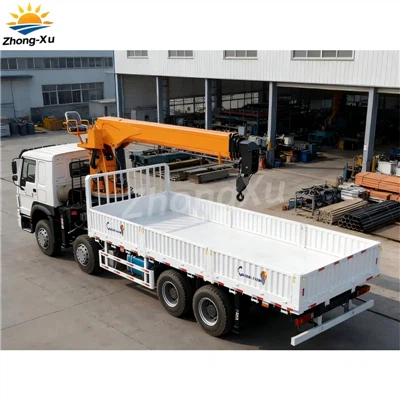
If you’ve been scratching your head trying to figure out if a full trailer is right for your business, or you’re ready to upgrade your current rig, hit me up to chat. I don’t push the most expensive trailer— I’ll tell you exactly what you need, based on the work you do, so you don’t waste money on something that’s overkill or too light. Whether you’re a small farm just starting out, a construction company expanding your fleet, or a logistics firm that needs heavy haul capacity, I’ve got you covered.
Side Curtain Trailer References
- U.S. Department of Transportation, Federal Motor Carrier Safety Administration
- Trailer Builders & Repairers Association
- National Ag Statistics Service
Liangshan Zhongxu Automobile Trading Co., Ltd.
As one of the leading full trailer manufacturers and suppliers in China, we provide high quality modern transport vehicle with competitive price. Welcome to buy high-grade full trailer for sale here from our factory. If you have any enquiry about quotation, please feel free to email us.
Address: Feichi Automobile Industrial Park, No. 1 Jiangjie Road, Liangshan County, Shandong Province, China.
E-mail: 95340278@qq.com
WebSite: https://www.zhongxu-auto.com/
