If you’ve ever stood in a workshop, watching a fitter or metalworker adjust a cutting wheel on an angle grinder, you know it’s not just a tool—it’s the bridge between a rough piece of material and a finished part, a repaired component, or a custom project. For years, as someone who’s supplied cutting wheels to fabricators, construction crews, auto body shops, and small hobby garages, I’ve heard this question a hundred times: “What’s the best brand of cutting wheels?” Cutting Wheels

I used to fumble with answers—names of brands I’d worked with, anecdotes about wheels that lasted too few cuts or shattered mid-use. But over 12 years in this trade, I’ve learned “best” isn’t a one-size-fits-all label. It’s a balance of what the wheel is designed to cut, how the user operates it, and what the end goal is—whether that’s speed, precision, safety, or cost-effectiveness for a high-volume job. Let’s break this down, not by brand name alone, but by the science that makes a cutting wheel work, and which brands align with specific needs, from the perspective of someone who sees the real-world results every day.
First, let’s get one thing straight: a cutting wheel is a consumable, not a permanent tool. It’s made of three core components that determine its performance, and brands that nail these three areas separate themselves from the rest. The first is the abrasive grain. This is the sharp, hard part that actually cuts through material—most commonly aluminum oxide for general purpose, silicon carbide for non-metals like tile or stone, and diamond grain for ultra-hard materials like concrete or porcelain. The second is the bond: the material that holds the grains in place. A rigid bond keeps grains sharp longer for hard materials, while a more flexible bond self-sharpens for softer materials, so old grains break away to reveal new ones instead of glazing over. The third is the backing, usually fiberglass mesh embedded in resin, which gives the wheel its tensile strength to resist shattering when under pressure.
Brands that invest in these components, instead of cutting corners on cheap grain or thin mesh, are the ones that rise to the top in real use, not just marketing claims. Let’s talk about the categories that matter most to our customers, because a brand that works for 1/4-inch steel rod will fall short on 6-inch thick I-beams.
General purpose cutting wheels: For day-to-day work on mild steel, angle iron, sheet metal, and pipe, this is the workhorse of most workshops. A brand I’ve consistently seen hold up here is Norton. Not because they have the loudest ads, but because their 1/32-inch thick Type 27 cutting wheels (designed for angle grinders, with a depressed center that fits close to corners) are calibrated to have a medium bond that balances speed and grain life. I recently supplied a batch to a local structural steel fabricator who went through 50 wheels a week for 18 months; they told me these wheels cut through 2-inch angle iron 20% faster than the cheaper no-name wheels they’d been buying, and had 30% less wheel breakage when used correctly. The key here is that Norton doesn’t overpromise—their wheels are designed for general mild steel, so they don’t work as well on stainless or non-metals, but for their intended use, they’re reliable. That’s important: the best brand for a job is one that’s designed for that job.
Stainless steel cutting wheels: This is where things get tricky. Stainless is softer than mild steel, but it’s prone to galling (grains sticking to the surface of the wheel, which leaves a rough cut and can cause the wheel to grab). You need a wheel with a soft, self-sharpening bond to prevent that, and abrasive grain that won’t contaminate the stainless (iron from regular aluminum oxide can leave rust spots on stainless, which ruin a finished part). For this, I’ve relied on 3M for years. Their Cut-Off Wheels for Stainless Steel use a specialized zirconia alumina grain that’s resistant to contamination, and a resin bond that breaks away old grains before they glaze. A precision auto parts client of mine uses these for cutting custom stainless exhaust manifolds; they told me they get 15-20 cuts per wheel on 1-inch stainless pipe, compared to 8-10 for other brands, and the cuts are smooth enough that they barely need grinding after. The only caveat? These wheels are a little more expensive, but for stainless, where rework costs add up fast, they save money in the long run. Anyone who tells you a cheap stainless wheel is just as good is either lying or hasn’t seen the rust marks or rough edges that come from the wrong grain.
Non-metal and hard material cutting: Tile, stone, concrete, and masonry need a different animal entirely. For these, diamond cutting wheels are non-negotiable, because they’re the only abrasive hard enough to cut through these dense, non-metallic materials. Here, my go-to brand is DeWalt. Their segmented diamond blades (the ones with gaps between the diamond segments on the edge) are designed to prevent overheating when cutting concrete, which is key because overheated diamonds stop cutting and fall out too early. I supplied a batch of these to a masonry company working on a residential deck that required cutting 100 linear feet of 12-inch concrete pavers; they told me each blade cut through more than twice as much material as the no-name diamond wheels they’d used before, and didn’t require pausing to cool down as often. For tile, Bosch’s thin-rim diamond wheels are better for precision cuts on porcelain or ceramic, since they leave less chipping and fit in tighter spaces—though I’ve found they don’t hold up as well on thick concrete, so matching the wheel to the material is everything here.
Now, let’s talk about what makes a brand bad, because that’s just as important as what makes one good. I’ve had customers come to me after buying super cheap cutting wheels from big-box stores or online marketplaces, claiming “all brands are the same.” I’ve seen these wheels shatter mid-cut, sending shrapnel flying (a huge safety hazard), get stuck so deep in steel that they can’t cut through, or wear down after just 2-3 cuts. The problem with cheap wheels is that they use coarse, low-quality abrasive grain, thin fiberglass mesh, and a weak resin bond. They cut corners on the science that makes a wheel safe and effective. For example, a standard 4.5-inch cutting wheel should have a minimum of two fiberglass mesh layers to meet OSHA safety standards, but some no-name brands use only one, or even a thin plastic mesh that melts under pressure. That’s not just a bad wheel—that’s a danger in the workshop.
But here’s the thing: the “best” brand also depends on how the user uses the wheel. I’ve seen a high-volume metal shop swear by Norton for general steel, but when they switched to 3M for stainless, their rework rate dropped by 40%. I’ve also had a small hobbyist woodworker use a cheap diamond wheel for cutting reclaimed wood (wait, wood? No, he was cutting metal studs for a shelf) and it worked for his small project, but if he’d been doing 100 cuts a day, it would have fallen apart. The user’s experience matters too. A new apprentice is more likely to have issues with a thin, fast-cutting wheel because they put too much pressure on it, so a thicker, more rigid wheel is better for them, even if it’s a little slower. A seasoned tradesman who knows how to control their angle grinder will get more out of a thinner, faster wheel that gives a cleaner cut.
As a supplier, I don’t just sell wheels—I sell solutions. Last year, I worked with a medium-sized construction company that was going through three times as many cutting wheels as their budget allowed. We sat down and mapped out their jobs: 60% mild steel rebar, 25% stainless steel handrails, 10% concrete forms, 5% tile. We didn’t push them to buy the most expensive brand; we matched each job to the right wheel: Norton for rebar, 3M for stainless, DeWalt diamond for concrete, and a budget-friendly silicon carbide wheel (from a brand called Tyrolit, which I’ve had good experiences with for non-metal) for tile. Within three months, their wheel consumption dropped by 35%, and they had fewer workplace incidents because the wheels were matching their needs. That’s the real answer to “best brand”: it’s the one that fits your specific job, your workflow, and your safety needs.
I also want to touch on safety, because no brand is better than its ability to keep the user safe. All the brands I’ve mentioned—Norton, 3M, DeWalt, Tyrolit—meet international safety standards (like ISO 9001, for those who care about formal certifications) and put safety warnings clearly on their packaging. Cheap wheels often skip these labels, or have vague warnings, because they’re not held to the same testing standards. I once tested a batch of no-name 4.5-inch cutting wheels a customer brought in; I ran one on an angle grinder with a guard that had a impact tester, and it shattered at half the recommended RPM, sending pieces flying. That’s why I never recommend those brands, no matter how cheap they are.
Let’s wrap this up: there is no universal “best brand of cutting wheel.” But there are brands that excel in specific categories, brands that cut corners and pose safety risks, and brands that work with suppliers like me to offer tailored solutions for different jobs. For general mild steel, you can’t go wrong with Norton. For stainless steel, 3M is the gold standard for precision and low rework. For concrete and masonry, DeWalt’s diamond wheels hold up to high-volume use. For small non-metal jobs, Tyrolit’s budget-friendly options work great. And at the end of the day, the best brand is the one that helps you get the job done safely, on time, and without wasting money on wheels that don’t perform.
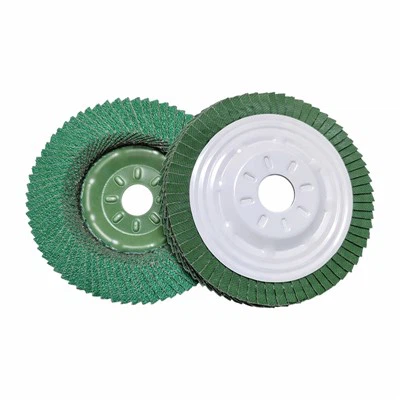
If you’re a workshop manager, tradesperson, or contractor looking to cut down on wheel costs, reduce safety incidents, or get better results on your cuts, I’m here to help. We can assess your specific needs, match you to the right wheels for your jobs, and work with your budget to find the best solution, not just the most expensive or most well-known brand. Don’t settle for wheels that fall apart mid-cut or leave you with hours of rework—let’s find the cutting wheels that work for you.
Ceramic Flap Disc References:
- ANSI B7.1-2019, Safety Requirements for the Use, Care, and Protection of Abrasive Wheels
- ISO 9001:2015, Quality Management Systems Requirements for Abrasive Product Manufacturers
- Fabricators & Manufacturers Association (FMA), 2022 Report on Cutting Wheel Performance and Cost Efficiency in Metal Fabrication
Henan Yandisc Hardware Tools Co., Ltd.
Address: Zinan Road, High-tech Industrial Development Zone, Zhengzhou, Henan, China
E-mail: info@yandisc.com
WebSite: https://www.yandisc.com/
