If you’ve ever stood in a hardware store aisle, staring at two drill bits that look like they could do the same job, you’ve probably wondered: when do I reach for a Forstner vs. a twist bit? As someone who’s spent 7 years sourcing and selling drill bits to everyone from weekend DIYers to professional cabinet makers, I get this question all the time. It’s not just about shape—these two bits are built for totally different tasks, and using the wrong one isn’t just inefficient; it can ruin a piece of wood, metal, or whatever you’re working on. Let’s break this down like I’m chatting with you at my warehouse loading dock, no boring textbook jargon, just real-world stuff we deal with daily. Drill Bits
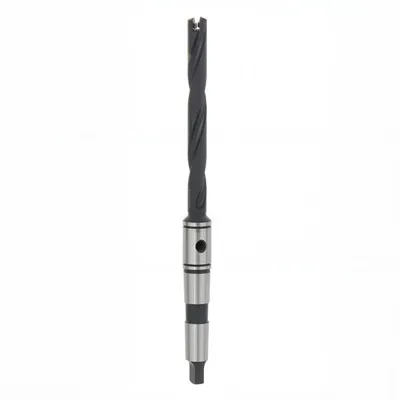
First, let’s talk about the twist bit—you’ve definitely used one, even if you didn’t know the name. That’s the standard pointy thing you grab for your basic power drill, right? It has that sharp center point (the spur, we call it the tip) that kind of bites into material so it doesn’t skid when you start drilling, and two twisted flutes running up the body to carry all the chips and shavings out as you go. Twist bits have been around for over a century, basically the workhorse of the drill bit world. They’re cheap, easy to find at any gas station checkout, and they do a lot of jobs okay—but they’re not great at precision. For example, if you need a perfectly flat-bottomed hole for a dowel to fit a cabinet door, a twist bit’s sloped bottom leaves a gap there, and if you’re drilling a hole right up against the edge of a board, that sharp point will often splinter the edge or even split the whole board if you push too hard. I’ve seen so many customers come back upset because their $500 maple cutting board split because they used a twist bit for dowel holes. That’s the kind of headache we try to help them avoid.
Now, the Forstner bit—this is the fancy cousin, but it’s not just a gimmick. Invented in the 1860s by a German guy named Benjamin Forstner, it’s built for precision. Let’s describe its shape, because that’s where all its superpowers come from. Instead of a single point, it has two outer cutting spurs (the sharp outer edges that do most of the heavy lifting) and a flat, circular cutting face in the center. No sloped bottom—so when you drill a hole, the base is totally flat, just like a cup. The flutes on a Forstner bit are usually wider and deeper too, so they can clear bigger chips, which is great for dense wood like oak or even hard plastics. The biggest thing? That outer spur is designed to follow a straight line, so it doesn’t skid as much, and it doesn’t blow out the back of the board as easily. If you’re drilling a hole for a hinge on a kitchen cabinet, that perfectly flat bottom means the hinge sits flush, no wobbling, and it just looks way better than a twist bit hole. I sell a lot more Forstner bits to professional woodworkers than DIYers, but lately more weekend builders are catching on because of how much nicer their projects turn out.
Let’s get into the nitty-gritty of how they perform on different materials, because that’s where the real difference hits. First, wood—this is where both bits shine, just for different things. Twist bits are perfect for quick, through-holes that don’t need precision, like drilling a hole for a shelf pin that’s going to be hidden inside a cabinet. They spin fast, they work in a pinch, and you don’t have to baby them too much. But Forstner bits? They’re kings of precision woodwork. Want overlapping holes for a mortise and tenon joint? Forstner bits drill perfectly round holes that line up exactly, no gaps. Want a hole right at the edge of a board, like for a drawer pull? The Forstner’s outer spur guides it so you can drill 1/8 of an inch from the edge without splitting, which is a game changer. I had a customer last month who builds custom window frames, and he told me he cut his assembly time in half once he switched from twist bits to Forstner for his dowel holes. No more chiseling the flat bottom of each hole after drilling.
Now, what about other materials, like metal or plastic? Twist bits still dominate here, and for good reason. Their sharp point is perfect for starting holes in thin metal, sheet metal for ductwork, or even aluminum for small projects. Twist bits come in every size imaginable, from tiny bits for jewelry making to huge ones for structural steel. But Forstner bits? They work on metal too, but they’re way better for thick, dense metal, and they drill larger, cleaner holes than twist bits. Wait, no—let me correct that: For twist bits, as the hole gets bigger, they start to flex, right? A 1-inch twist bit will wobble a little, leaving an uneven edge, but a 1-inch Forstner bit stays rigid because of its flat body, so the hole is perfectly round. That’s why professional metalworkers use Forstner bits for large holes in steel or stainless steel, not twist bits. For plastic, Forstner bits don’t melt the edges as much as twist bits, which is huge for things like acrylic signs or plastic plumbing parts where a melted edge ruins the whole piece. I learned that the hard way early on—sold a batch of cheap twist bits to a sign maker, and he came back with 20 messed up acrylic boards, so now we only stock Forstner bits for plastic applications.
Another big difference: hole depth and stacking materials. Twist bits can drill deep holes, but they have a problem with chip evacuation the deeper they go. The flutes get clogged with chips, so you have to pull the bit out every half an inch to clear it, which adds time. Forstner bits have wider flutes, so they clear chips way better, and because they cut from the outer edge instead of just the center, they don’t get stuck as easily in deep holes. If you’re drilling a 2-inch deep hole for a shelf pin that goes all the way through a thick oak cabinet side, a Forstner bit will do it in one go, whereas a twist bit would need three stops. Also, if you need to drill multiple holes in a straight line, Forstner bits are consistent. Every hole is the same size, same depth, same flat bottom—perfect for batch work, which is what most professional shops do. Twist bits, especially cheap ones, can vary in size by 1/32 of an inch, which might not matter for a DIYer, but for a cabinet maker, that’s enough to make a drawer that won’t close.
Wait, let’s talk about setup too, because that’s a big pain point for a lot of people. Twist bits work in any drill, right? Cordless, electric, even hand drills—you just shove it in the chuck, tighten it, and go. Forstner bits? They need a drill press, or at least a drill that’s clamped down, because if you hold a cordless drill in your hand and try to use a Forstner bit, the torque will make your arm twist, and you’ll drill a crooked hole. That’s why a lot of DIYers never use Forstner bits—they don’t have a drill press. But that’s changing now, with handheld Forstner bits that work with heavy-duty drill drivers, as long as you clamp your workpiece down. I always tell customers: if you’re drilling freehand, stick to twist bits. If you can secure the workpiece and have a drill with enough torque, Forstner is the way to go.
Also, cost—let’s be real, that matters. Twist bits are super cheap. You can get a 10-pack for $5 at a big box store. Forstner bits are more expensive, especially carbide-tipped ones, which last way longer. A single Forstner bit might cost $10 to $30, but it’ll outlast 10 cheap twist bits. So it’s a trade-off: spend less upfront for twist bits, but replace them more often and deal with more mistakes, or spend a bit more for Forstner bits that last and give you way better results. I always explain that to new customers who are on a budget—if you only do a few small projects a year, twist bits are fine. If you do this for a living, Forstner is an investment that pays off.
Let’s cover some common mistakes people make, because I hear about these all the time. Number one: using a twist bit for a dowel hole. Like I mentioned before, that leaves a gap between the dowel and the board, so the joint is weak. I’ve seen tables collapse because of that. Number two: using a Forstner bit without securing the workpiece. You’ll get a crooked hole, or even the bit will snap, which is dangerous. Number three: pushing too hard with either bit. Twist bits work best when you let the bit do the cutting, not your muscle. Pushing too hard will make it skid, or break the tip. Forstner bits are sturdier, but pushing too hard will clog the flutes with chips, leading to overheating and dulling the bit fast.
Wait, what about forstner bits vs spade bits? No, the question is Forstner vs twist, so let’s stay on track. Another key point: clean exit holes. If you’re drilling through a piece of wood or metal, the back of the hole with a twist bit will usually splinter, tear out, or have a rough edge. That’s called breakout. Forstner bits have a design that almost eliminates breakout, because they cut around the edge first before removing the center. So if you’re drilling through a decorative panel, you can put a scrap piece of wood behind it, and the Forstner bit will drill through without tearing the back, no chisel touch-ups needed. That’s a huge deal for furniture makers who care about every visible edge.
Now, let’s talk about maintenance, because that’s part of how long your bits last. Twist bits are easy to sharpen—anyone can get a cheap sharpener for them at the hardware store. Forstner bits are a bit trickier, because they have multiple cutting edges, so you need a specialized sharpener to get all the spurs and the flat face aligned correctly. But again, because Forstner bits cut with less force, they dull slower than twist bits, so you don’t have to sharpen them as often. I always recommend investing in a good sharpening kit if you buy Forstner bits, because a dull Forstner bit is worse than a dull twist bit—it will skip, clog chips, and ruin your workpiece way faster.
At the end of the day, the choice between Forstner and twist bit comes down to three things: what material you’re drilling, how precise you need the hole to be, and what tools you have. If you need a quick, non-precise hole, like for a pilot hole before driving a screw, or a hole for a shelf pin that’s going to be hidden, go with twist. If you need a perfectly round, flat-bottomed hole at the edge of a board, for a dowel, hinge, or decorative part, go Forstner. And if you’re drilling metal, especially thick metal, Forstner is way better for large, clean holes.
A lot of people come to me asking “which is better?” and the answer is: neither is better, they’re just for different jobs. It’s like asking if a hammer is better than a screwdriver—they both do different things. The worst thing you can do is use a twist bit when you need a Forstner, or vice versa. We’ve all had that project where the hole is messed up and you have to start over, wasting time and material, and that’s exactly what we’re here to help you avoid.
If you’re not sure which bit you need for your next project, or you’re tired of buying cheap bits that dull after one use, hit us up to chat. We’ve got every size of twist and Forstner bits, from budget-friendly DIY options to professional-grade carbide-tipped bits that last for years. We don’t sell one-size-fits-all garbage—we’ll help you pick exactly what works for your project, no pushy sales stuff, just real advice from people who drill bits all day every day.
Spade Drill References
- Forstner Bit Basics, Woodworking Network, 2022
- Twist Bit Performance and Applications, Machinery’s Handbook, 31st Edition
- Drill Bit Selection Guide, Metal Fabricators Association, 2021
- Woodworking Hole Precision: A Comparative Analysis of Drill Bit Types, Journal of Woodworking Technology, 2020
Small Craftsman (Shandong) Machine & Tools Co., Ltd.
Small Craftsman (Shandong) Machine & Tools Co., Ltd. is one of the most experienced drill bits manufacturers and suppliers in China, also supports customized service with low price. Please feel free to buy bulk high quality drill bits in stock here from our factory. Contact us for pricelist.
Address: No.9 Quanxin Rd., Sishui Economic Developing Zone, Jining, Shandong, China.
E-mail: 6196@ocutchina.com
WebSite: https://www.ocutooling.com/
