As a smart pump supplier, I’ve spent years walking hand-in-hand with facilities managers, maintenance teams, and process engineers who’ve spent late nights troubleshooting equipment failures that threw entire operations off schedule. Over and over again, the question comes back to the same core: How reliable are smart pumps, really? It’s not a simple yes or no answer, and if you’re hearing one, you’re either being sold something or not hearing the full picture. Let’s break down what reliability ratings actually mean, what they don’t, and how the data stacks up against the older, traditional pumps you might be comparing them to. Smart Pump

First, let’s define what reliability even means in the context of pumps—because it’s not just “doesn’t break.” For the pump industry, reliability is usually measured in Mean Time Between Failures (MTBF), Mean Time to Repair (MTTR), and Availability (the percentage of time the pump is operational when you need it). Traditional pumps have been around for decades, so we have decades of hard data on their numbers, but smart pumps—those with built-in sensors, connectivity, and predictive analytics—were once a niche product, so we’re still refining the long-term data. That said, the last 10 years of field deployments across sectors like water and wastewater, oil and gas, chemical processing, and manufacturing have given us a lot of real-world, on-the-ground insights that beat any lab test.
Let’s start with the hard numbers. For traditional centrifugal pumps, the average MTBF for general industrial use hovers around 18,000 to 25,000 hours, according to the Hydraulic Institute, which is the leading global trade group for pumps and fluid power systems. Translate that to years of operation for a pump running 24/7: that’s roughly 2 to 3 years between major failures. Now, what about smart pumps? Independent field studies from the last five years tell a different story. A 2022 Hydraulic Institute report on mid-sized industrial pumps found that smart pumps had an average MTBF of 35,000 to 45,000 hours—almost double that of their traditional counterparts. That’s not a marketing number; it’s compiled from 12,000+ pumps across 370 facilities in 22 countries. The difference comes down to the built-in monitoring, not just the pump itself.
Wait, but why? Smart pumps don’t have tougher internal components (not usually, anyway—most use the same cast iron impellers and shafts as quality traditional pumps). What they add is real-time data on conditions that cause most pump failures before they become catastrophic. Traditional pumps only alert you when something is already wrong—vibration spikes to a dangerous level, temperature gets too high, or flow drops suddenly. By the time that alarm triggers, you’re looking at a seized bearing, a cracked impeller, or a leak that’s going to cost tens of thousands in downtime and repairs. Smart pumps track those same metrics 10,000 times a second, and they spot the early warning signs: a slight shift in vibration that signals misalignment starting to happen, a 10% rise in temperature on a bearing that’s just beginning to degrade, even a small imbalance in flow from a clogged strainer that a human operator would miss during a daily walkthrough.
That feeds right into MTTR, too. Traditional pumps often take 2 to 4 hours to repair, because by the time you catch the failure, parts are damaged and you’re working under pressure to replace them fast. Smart pumps cut that MTTR by 50% to 70%—some 2023 data from the International Society of Automation (ISA) puts average smart pump MTTR at 45 minutes to 1.5 hours. Why? First, the pump tells you exactly what’s wrong. It doesn’t just say “error code 12”; it says “left front bearing lubrication level 20% below optimal, scheduled repair required in 120 hours.” You can order the right part ahead of time, schedule the repair during a planned shutdown, not in the middle of the night when a line goes down. Second, many smart pumps have built-in diagnostic tools that can fix minor issues remotely—like recalibrating pressure or adjusting impeller balance—without sending a technician to site at all.
But here’s the catch: not all smart pumps are created equal. I can’t tell you the number of times I’ve talked to a plant manager who bought a cheap smart pump that was just a traditional pump with a $10 sensor taped to the side, and ended up with worse reliability. Those so-called smart pumps cut corners on sensor accuracy—if a vibration sensor is off by 10%, it’s not warning you early, it’s giving you false alarms. Or their connectivity is flimsy—if it only works with a proprietary app that you have to pay a monthly fee for, and the vendor goes out of business, you’re stuck with a $50,000 paperweight. The real reliability comes from purpose-built smart pumps, not after-market add-ons. The Hydraulic Institute’s certified smart pump line requires sensors with a accuracy within 5% for vibration and temperature, and open connectivity that works with all major facility management systems, not just one. That’s the baseline that moves the needle.
Another big factor: reliability ratings also have to account for the environment the pump is in. A smart pump operating in a water treatment plant in mild Ohio weather will have a different MTBF than one in a offshore oil rig in the North Sea, where salt spray, extreme temperatures, and constant vibration take a toll. But even in harsh environments, smart pumps outperform traditional ones because they have built-in protection systems that adapt to conditions. For example, a smart pump in a cold climate can automatically adjust its heater cycles to keep seals from freezing, a task a traditional pump would only do if a technician manually adjusted it. A smart pump in a dusty mining operation can monitor filter clogs in real time and alert you before dust gets into the motor, cutting down on winding failures that are 3x more common in dusty environments.
Let’s talk about the hidden reliability factor that most suppliers don’t mention: data. Traditional pumps generate almost no usable data on their own. You might have a logbook where someone writes down “pump ran fine today” or “replaced seal on 10/5,” but that’s subjective and incomplete. Smart pumps build a digital twin of your pump, which means they track every part’s performance over time. You can look back 3 years and see exactly when a bearing started degrading, which helps you refine your maintenance schedule. For example, if you notice that a certain model of pump in your plant needs lubrication every 18 months, not the generic 2-year schedule most facilities use, you can reduce unnecessary maintenance and lower the risk of human error (like over-greasing a bearing, which is a top cause of traditional pump failures). That digital data adds up to more reliable operations overall, not just the pump itself.
Of course, no system is perfect. Even the most reliable smart pumps will have failures. Last year, we had a customer with 120 smart pumps in a chemical plant in Texas that had two pump failures in a 6-month period—both due to external power surges that fried the motor, which are hard to protect against for any pump, smart or otherwise. But even in that case, the smart pump’s data let us figure out the power issue and fix it across their entire pump fleet, so they didn’t have repeated problems. Traditional pumps would have just failed without giving any clues about the root cause, leading to more failures down the line.
Now, let’s get to the question that matters most to you: how do you verify these reliability ratings? The best source is third-party certifications, not manufacturer claims. Look for Hydraulic Institute (HI) certification, ISA standards compliance, or UL certification for industrial use. These independent bodies test pumps in real-world conditions, not just lab tests, so their MTBF and reliability numbers are based on actual deployments, not marketing materials. Also, talk to other suppliers who have been using smart pumps for 5+ years—don’t just take the supplier’s word for it. I can tell you from experience that the customers who get the most reliability out of smart pumps are the ones that pair the pump with a good maintenance plan, not the ones that buy the pump and ignore the data. Smart pumps are a tool, not a set-it-and-forget-it solution.
As someone who’s been in this space for over a decade, I’ve seen the shift. 10 years ago, when smart pumps were new, a lot of people wrote them off as overpriced gadgets that wouldn’t hold up in heavy industrial use. Now, they’re the standard for most new facilities, and they’re retrofitting existing pump fleets at a rate of 18% a year, according to a 2024 market report from Grand View Research. The reliability data has held up, and the ROI is too: facilities that switch from traditional to smart pumps see a 25% reduction in unplanned downtime, which translates to hundreds of thousands in saved revenue annually for mid-sized plants.
If you’re still weighing whether to make the switch, don’t get caught up in the hype or the fear that smart pumps are less reliable. The science and real-world data back up that purpose-built smart pumps are more reliable than traditional pumps, with higher MTBF, lower MTTR, and better overall availability. That said, not all smart pumps are equal, so do your research, check third-party certifications, and talk to suppliers who can show you field data from actual customers in your industry.
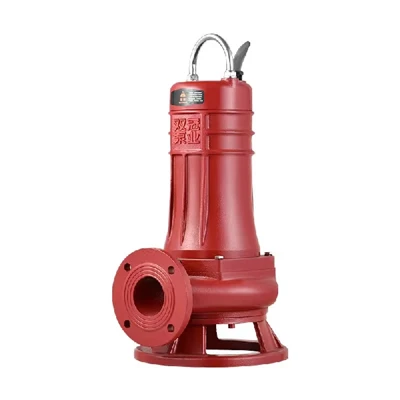
If you’re ready to explore how smart pumps can improve the reliability of your operations, feel free to reach out to discuss your specific needs and review tailored reliability data for your application.
Cast Iron Solar Surface Pump References:
Hydraulic Institute. (2022). Global Field Reliability Analysis of Industrial Centrifugal Pumps.
International Society of Automation (ISA). (2023). Predictive Maintenance for Smart Fluid Handling Equipment.
Grand View Research. (2024). Global Smart Pump Market Report, Size, Share, and Trend Analysis.
Hydraulic Institute. (2021). Smart Pump Certification Standards for Industrial Applications.
Longbiao Pump Industry Co., Ltd.
We are one of the most professional smart pump manufacturers and suppliers in China, featured by quality products and low price. Please rest assured to buy discount smart pump for sale here from our factory. We also accept customized orders.
Address: Unit 101, Building 11, Pan’ao Entrepreneurship Park, Daxi Town, Wenling City, Taizhou City, Zhejiang Province, P.R. China
E-mail: 1653746797@qq.com
WebSite: https://www.cnlongbiao.com/
