As a supplier of palletizing robots, I’ve had the privilege of witnessing firsthand how these remarkable machines are revolutionizing the logistics and manufacturing industries. In this blog, I’ll take you on a detailed journey through the inner workings of a palletizing robot, exploring its components, operation processes, and the benefits it brings to businesses. Palletizing Robot
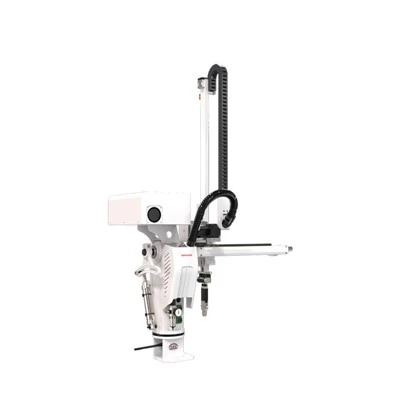
Components of a Palletizing Robot
A palletizing robot is a complex piece of machinery composed of several key components, each playing a crucial role in its overall functionality.
Robot Arm
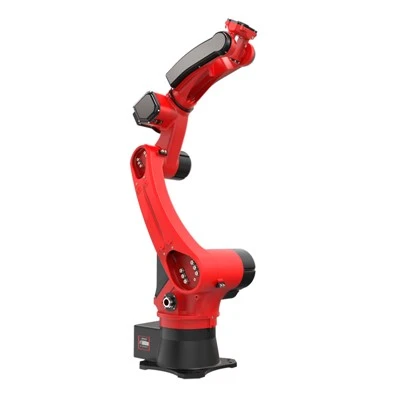
The robot arm is the most visible part of the palletizing robot. It is designed to mimic the movement of a human arm, with multiple joints that provide a high degree of flexibility and range of motion. The robot arm is typically made of lightweight yet strong materials such as aluminum or steel to ensure both durability and agility. The number of joints can vary, but most palletizing robots have at least four to six axes, which allows them to reach different positions and orientations with precision.
End – Effector
The end – effector is the tool attached to the end of the robot arm. Its main function is to grip and handle the products to be palletized. There are different types of end – effectors available, depending on the nature of the products. For example, suction cups are commonly used for handling flat and smooth objects like boxes or bags, as they can create a strong vacuum seal. Mechanical grippers, on the other hand, are suitable for irregularly shaped or heavy items. Some advanced end – effectors can even be equipped with sensors to detect the position and orientation of the products, ensuring accurate handling.
Base
The base of the palletizing robot provides stability and support for the entire system. It is usually fixed to the floor or a mounting surface to prevent any unwanted movement during operation. The base also houses the robot’s control system and power supply. Some bases are designed to be mobile, allowing the robot to be easily relocated within a facility to meet different production needs.
Control System
The control system is the brain of the palletizing robot. It is responsible for coordinating the movement of the robot arm, end – effector, and other components. The control system uses a combination of software and hardware to execute commands and ensure smooth operation. Operators can program the control system to define the palletizing pattern, the number of layers, and the position of each product on the pallet. Advanced control systems can also integrate with other factory automation systems, such as conveyor belts and warehouse management systems, to optimize the overall production process.
How a Palletizing Robot Operates
The operation of a palletizing robot can be divided into several steps:
Product Infeed
The first step is to transport the products to the palletizing area. This is usually done using conveyor belts or other material handling equipment. The products are arranged in a single file or in a specific pattern, depending on the design of the palletizing system. The conveyor belt moves the products at a consistent speed towards the robot’s working area.
Product Detection
As the products approach the robot, sensors installed in the system detect their presence, position, and orientation. These sensors can be photoelectric sensors, laser sensors, or vision systems. The detected information is then sent to the control system, which uses it to calculate the optimal path and movement for the robot arm to pick up the product.
Product Pick – Up
Based on the information received from the sensors, the control system commands the robot arm to move towards the product. The end – effector is then activated to grip the product securely. For example, if the end – effector is a suction cup, the vacuum pump is turned on to create a suction force. If it is a mechanical gripper, the gripper fingers close around the product.
Pallet Arrangement
The control system has a pre – programmed palletizing pattern. After picking up the product, the robot arm moves it to the designated position on the pallet. The pattern can be a simple stack, a more complex interlocking pattern, or a custom – designed layout to maximize the use of space on the pallet. The robot carefully places the product on the pallet, ensuring that it is properly aligned and stable.
Layer Formation
The palletizing process is typically carried out layer by layer. After placing one product, the robot repeats the pick – up and placement process until an entire layer is formed on the pallet. Once a layer is complete, the pallet may be lowered slightly to make room for the next layer, or the robot may adjust its height to start stacking the next layer on top.
Pallet Exit
After the pallet is fully loaded, it is transported out of the palletizing area by a forklift or an automated guided vehicle (AGV). A new empty pallet is then moved into place, and the palletizing process resumes.
Benefits of Using a Palletizing Robot
Using a palletizing robot in a manufacturing or logistics facility offers numerous benefits for businesses:
Increased Efficiency
Palletizing robots can work 24/7 without getting tired or making mistakes. They can handle a large number of products in a short period of time, significantly increasing the overall production throughput. Compared to manual palletizing, which is time – consuming and labor – intensive, a robot can complete the same task much faster and more consistently.
Improved Accuracy
The precision of a palletizing robot ensures that products are placed on the pallet with high accuracy. This reduces the risk of product damage during transportation and storage. The robots can also create more stable pallet loads, which are less likely to tip over or collapse, improving safety in the workplace.
Flexibility
Palletizing robots can be easily reprogrammed to handle different types of products and palletizing patterns. This makes them suitable for a wide range of industries, from food and beverage to pharmaceuticals and automotive. With a single robot, a company can adapt to changing production requirements without having to invest in new equipment.
Cost Savings
Although the initial investment in a palletizing robot may be relatively high, the long – term cost savings are significant. By reducing the need for manual labor, companies can save on labor costs, including wages, benefits, and training. Additionally, the increased efficiency and reduced product damage can lead to higher profits and a better return on investment.
Conclusion
In conclusion, palletizing robots are an indispensable part of modern manufacturing and logistics operations. Their advanced components, precise operation processes, and numerous benefits make them an attractive solution for businesses looking to improve efficiency, accuracy, and cost – effectiveness.
Welding Robot If you are interested in learning more about our palletizing robots or are considering purchasing one for your business, we would be delighted to have a discussion with you. Our team of experts can provide you with detailed information, answer your questions, and help you find the most suitable palletizing solution for your specific needs. Please reach out to us to start the procurement negotiation process.
References
- "Industrial Robotics: Technology, Programming, and Applications" by Peter Corke.
- "Automated Material Handling Systems: Design and Operation" by John A. White.
- Industry reports on palletizing technology from leading market research firms.
Robotic Technology (GD) Co., Ltd.
Robotic Technology (GD) Co., Ltd. is one of the most experienced palletizing robot manufacturers and suppliers in China, also supports custom service and one year warranty. Please feel free to wholesale CE approved palletizing robot for sale here from our factory. Contact us for quotation.
Address: Room 102, No. 30,Hengfeng 2nd Road,Daguo, Changping Town, Dongguan City,Guangdong,China
E-mail: admin@iroboticplus.com
WebSite: https://www.rb-tic.com/
