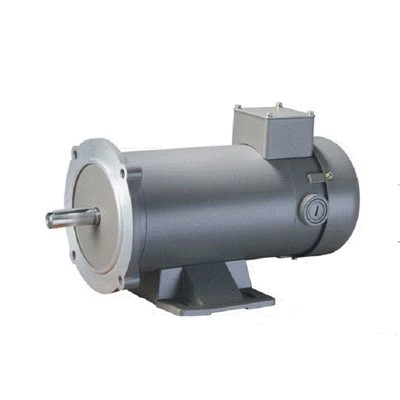
When it comes to integrating an AC servo motor into a robotic system, there are several crucial requirements that need to be met to ensure optimal performance, reliability, and efficiency. As a provider of AC servo motors, I’ve had the privilege of working with numerous robotics engineers and manufacturers, and I’d like to share some insights on these requirements. AC Servo Motor
1. Precision and Accuracy
In robotic systems, precision and accuracy are non – negotiable. AC servo motors are often required to perform highly precise movements, whether it’s positioning a robotic arm for pick – and – place operations in a manufacturing plant or controlling the delicate movements of a surgical robot.
The precision of an AC servo motor is determined by its encoder resolution. A high – resolution encoder can provide more feedback on the motor’s position, allowing the control system to make more accurate adjustments. For instance, in a robotic system that needs to place components with a tolerance of a few micrometers, a servo motor with a high – resolution encoder (e.g., 20 – bit or higher) is essential.
Accuracy, on the other hand, is related to how closely the motor can follow the commanded position. Factors such as motor torque ripple, friction in the mechanical system, and electrical noise can affect accuracy. To achieve high accuracy, our AC servo motors are designed with advanced control algorithms that can compensate for these factors. For example, we use torque ripple compensation algorithms to minimize the effects of torque variations, ensuring that the motor moves smoothly and precisely to the desired position.
2. Speed and Torque Requirements
Robotic systems often operate at different speeds and require varying amounts of torque depending on the task. For example, a robotic arm used in a high – speed packaging line needs to move quickly between different positions, while a robotic gripper may require high torque to hold objects firmly.
The speed of an AC servo motor is typically measured in revolutions per minute (RPM). The motor’s speed range should be able to cover the full range of speeds required by the robotic application. Our AC servo motors are available in a wide range of speed ratings, from low – speed motors suitable for applications that require fine – grained control, to high – speed motors for rapid movement tasks.
Torque is another critical factor. The continuous torque rating of the motor determines its ability to maintain a constant load over an extended period, while the peak torque rating is important for short – term high – load applications, such as accelerating or decelerating the robot. When selecting an AC servo motor for a robotic system, it’s crucial to calculate the required torque based on the robot’s payload, inertia, and the type of movement (e.g., linear or rotational). Our engineering team can assist customers in performing these calculations to ensure that the selected motor meets the exact torque requirements of their robotic application.
3. Dynamic Response
Dynamic response refers to how quickly the motor can change its speed and torque in response to a control signal. In a robotic system, a fast dynamic response is essential for tasks that involve rapid acceleration, deceleration, and changes in direction.
The dynamic response of an AC servo motor is influenced by several factors, including the motor’s electrical time constant, mechanical time constant, and the performance of the control system. Our AC servo motors are designed with low electrical and mechanical time constants, allowing them to respond quickly to changes in the control signal. Additionally, we use advanced control algorithms, such as proportional – integral – derivative (PID) control and feed – forward control, to further improve the motor’s dynamic response. These algorithms can adjust the motor’s output in real – time, ensuring that the robot can perform complex movements with high precision and speed.
4. Compatibility with the Robotic Control System
The AC servo motor must be compatible with the robotic control system. The control system is responsible for sending commands to the motor and receiving feedback on its position, speed, and torque. Compatibility issues can lead to poor performance, instability, and even system failure.
Most modern robotic control systems use digital communication protocols, such as EtherCAT, Modbus, or CANopen, to communicate with the servo motors. Our AC servo motors support a wide range of these communication protocols, allowing for seamless integration with different types of robotic control systems. We also provide software tools that can be used to configure and tune the motor parameters, ensuring that the motor works optimally with the control system.
5. Environmental Considerations
Robotic systems can operate in a variety of environments, from clean, temperature – controlled manufacturing facilities to harsh industrial settings. The AC servo motor must be able to withstand the environmental conditions of its intended application.
In terms of temperature, the motor should be able to operate within a specified temperature range. High temperatures can reduce the motor’s efficiency and lifespan, while low temperatures can affect the performance of the motor’s lubricants and electrical components. Our AC servo motors are designed to operate in a wide temperature range, from – 20°C to 60°C, and we can also provide customized solutions for extreme temperature environments.
Humidity, dust, and vibration are other environmental factors that need to be considered. In dusty or humid environments, the motor should be protected against the ingress of dust and moisture. Our motors are available with different levels of ingress protection (IP ratings), such as IP65 or IP67, which provide excellent protection against dust and water. For applications with high levels of vibration, we use vibration – resistant mounting techniques and design the motor’s internal components to withstand the mechanical stresses caused by vibration.
6. Reliability and Durability
Reliability and durability are of utmost importance in robotic systems. A motor failure can lead to costly downtime, production losses, and even safety hazards. Our AC servo motors are built with high – quality materials and undergo rigorous testing and quality control procedures to ensure their reliability and durability.
We use high – grade magnets, copper windings, and bearings in our motors to ensure long – term performance. The motors are also designed with redundant safety features, such as over – current protection, over – temperature protection, and position limit protection, to prevent damage to the motor and the robotic system. In addition, our products come with a comprehensive warranty, giving our customers peace of mind.
7. Maintenance Requirements
Minimal maintenance requirements are desirable in robotic systems. Our AC servo motors are designed for easy maintenance. They are equipped with self – diagnostic features that can detect faults and report them to the control system. This allows for proactive maintenance, reducing the risk of unexpected failures.
The motor’s design also facilitates easy access to components that may need to be replaced, such as the encoder or the brake. Our technical support team can provide customers with detailed maintenance instructions and assistance, ensuring that the motors are maintained properly throughout their lifespan.
In conclusion, integrating an AC servo motor into a robotic system requires careful consideration of precision, speed and torque requirements, dynamic response, compatibility with the control system, environmental factors, reliability, and maintenance requirements. As a leading provider of AC servo motors, we are committed to providing high – quality products that meet these requirements. If you are looking for an AC servo motor for your robotic system, we invite you to reach out to our team to discuss your specific needs. We can provide you with expert advice, customized solutions, and competitive pricing.
Switched Reluctance Motor References
- servo motor handbook
- robotics system design principles
- technical papers on motor control and precision motion
Zibo Auric Mechanical and Electrical Technology Co., Ltd.
As one of the leading ac servo motor manufacturers and suppliers in China, we warmly welcome you to buy advanced ac servo motor for sale here from our factory. All customized motors are with high quality and competitive price.
Address: B419, High-tech Entrepreneurship Park, High-tech Zone, Zibo City
E-mail: cui@auricmotor.com
WebSite: https://www.auricmotor.com/
